


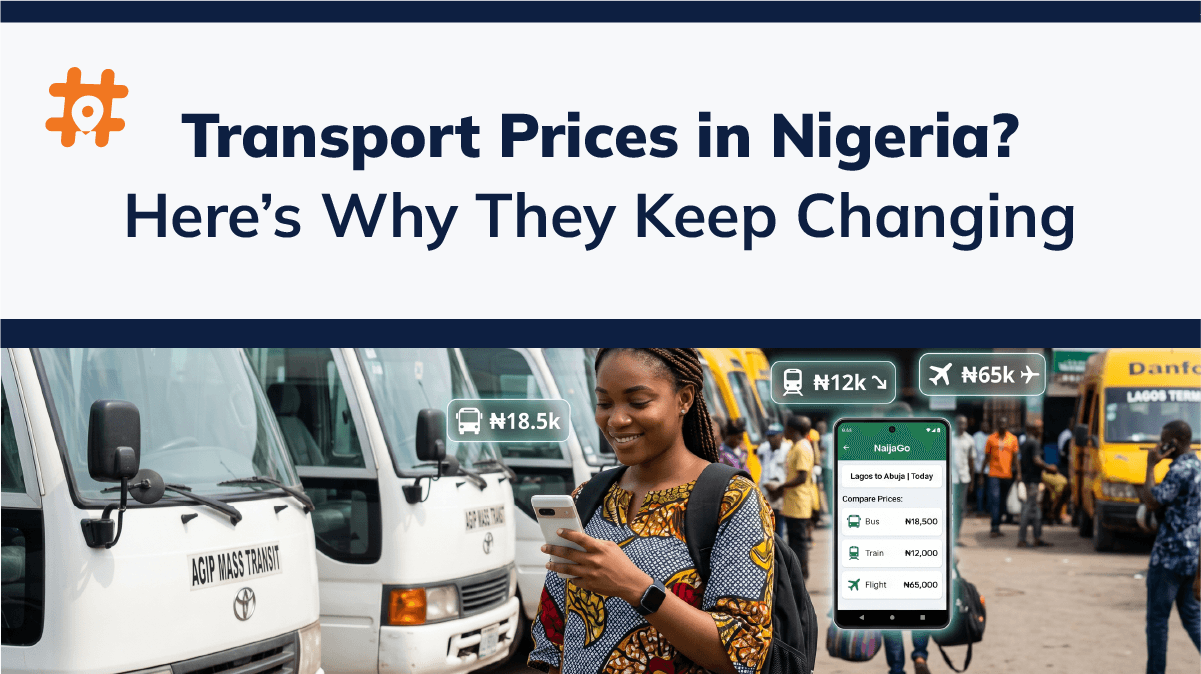
Transport prices in Nigeria can change suddenly, sometimes within days or even hours. If you’ve ever noticed that the cost of traveling today is different from what you paid last week, you’re not alone.
From buses to trains and flights, transport fares across Nigeria are influenced by several economic and operational factors. Understanding these factors can help you make smarter travel decisions and save money.
This guide breaks down why transport prices fluctuate in Nigeria and gives you practical ways to reduce your travel costs in 2026.
1. Fuel Price Changes (The Biggest Driver)
Fuel prices play the most significant role in determining transport costs in Nigeria.
When the price of petrol or diesel increases:
- Transport operators spend more on running vehicles
- Logistics costs rise
- Fares are adjusted to maintain profit margins
Since fuel prices in Nigeria are often unstable, transport fares tend to follow the same pattern.
2. Demand and Peak Travel Periods
Transport prices increase when demand is high.
Common peak periods include:
- Festive seasons (Christmas, Easter, Sallah)
- Public holidays
- Weekends
- School resumption periods
During these times:
- Seats sell out quickly
- Operators increase fares due to limited availability
This is why you may notice a sharp price difference between weekday and weekend travel.
3. Inflation and Economic Conditions
Nigeria’s inflation rate directly affects transportation costs.
As the cost of goods and services rises:
- Spare parts become more expensive
- Vehicle maintenance costs increase
- Staff wages go up
Transport operators adjust fares to cover these rising expenses, leading to frequent price changes.
4. Road Conditions and Travel Risks
Poor road infrastructure in many parts of Nigeria contributes to fluctuating transport prices.
Bad roads lead to:
- Higher vehicle wear and tear
- Increased fuel consumption
- Longer travel times
In addition, security concerns on certain routes may cause operators to:
- Reroute journeys
- Increase fares to cover risk
5. Government Policies and Regulations
Changes in government policies can also impact transport pricing.
Examples include:
- Fuel subsidy removal
- New transport regulations
- Taxation policies
These changes can have immediate effects on transport fares across the country.
6. Mode of Transport (Bus vs Train vs Flight)
Different transport options respond differently to market conditions.
Bus Transport:
- Most affected by fuel price changes
- Prices fluctuate frequently
Train Transport:
- More stable pricing
- Less affected by traffic and fuel volatility
Flights:
- Highly dynamic pricing
- Influenced by demand, timing, and booking window
Understanding these differences helps you choose the most cost-effective option for your trip.
How to Save Money on Transport in Nigeria
Even with fluctuating prices, there are smart ways to reduce your travel costs:
Book Early
Prices are usually lower when you book in advance
Avoid Peak Periods
Travel during weekdays or off-peak seasons
Compare Transport Options
Check buses, trains, and flights before deciding
Travel Light
Some transport providers charge extra for heavy luggage
Be Flexible with Timing
Adjusting your travel time can help you find cheaper fares
Final Thoughts
Transport price fluctuations in Nigeria are influenced by a combination of fuel costs, demand, inflation, infrastructure, and government policies.
While these factors may be beyond your control, understanding them puts you in a better position to plan smarter and spend less on travel.
Want to avoid overpaying for transport? Compare prices across bus, train, and flight options in one place and book your next trip easily with Intercity.
FAQs (Why Transport Prices Fluctuate in Nigeria)
Transport prices fluctuate due to fuel price changes, demand, inflation, and operational costs.
Yes, fuel is the biggest cost factor for transport operators, so any increase directly impacts fares.
Transport prices fluctuate due to fuel price changes, demand, inflation, and operational costs.
It depends on the route, but trains and buses are generally more affordable than flights.
Book early, avoid peak periods, and compare different transport options before making a decision.