


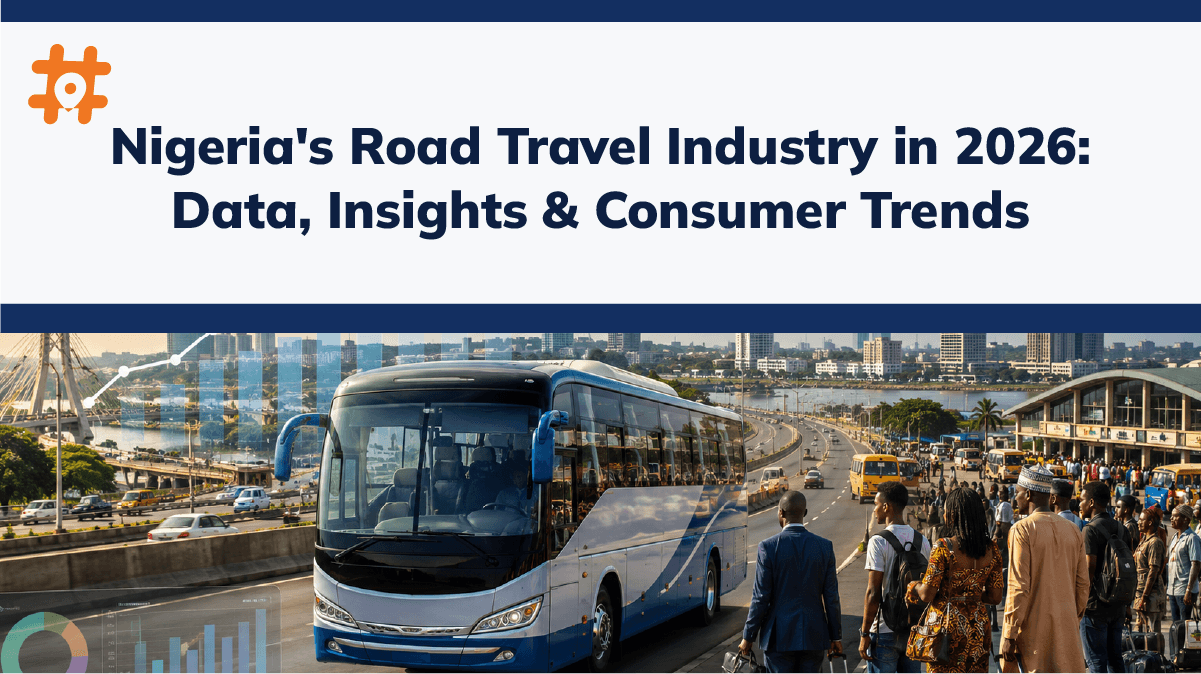
Every Journey Now Comes With a Bigger Price Tag
Travelling across Nigeria has become noticeably more expensive over the past few years. Whether you’re a business professional travelling between Lagos and Abuja, a trader heading to Benin, a student returning to campus, or a family visiting loved ones in Port Harcourt, transportation has become one of the biggest expenses associated with mobility.
Road transport remains the backbone of interstate movement in Nigeria, carrying millions of passengers every year. As inflation continues to influence fuel prices, vehicle maintenance, spare parts, insurance costs and general operating expenses, transport fares have gradually adjusted to reflect these realities.
To better understand how these economic realities are affecting everyday Nigerians, Intercity combined aggregated booking and operational insights from its platform with on-the-ground interviews conducted with passengers, transport operators and drivers across major motor parks.
Rather than relying solely on numbers, this report combines quantitative data with real experiences to provide a fuller picture of interstate travel in Nigeria today.
The findings reveal not only how much Nigerians are paying to travel, but also why they continue to travel despite rising costs, what operational challenges they encounter, and how inflation, insecurity and consumer behaviour are reshaping interstate mobility.
Key Findings at a Glance
- Average fares on Nigeria’s busiest interstate routes currently range between ₦18,000 and ₦40,000.
- Six major economic corridors now cluster around an average fare of ₦35,000.
- Lagos–Port Harcourt and Lagos–Calabar remain the highest-priced routes at approximately ₦40,000.
- Abuja, Port Harcourt, Benin, Asaba, Kano and Kaduna continue to record strong travel demand.
- Delayed departures remain one of the most common operational challenges experienced by passengers.
- Passenger interviews reveal that Nigerians continue travelling primarily for business, education, healthcare, family responsibilities and personal milestones despite rising transport costs.
- Drivers and operators say insecurity on major highways is changing passenger behaviour, with more people choosing air travel or sending waybills instead of making road trips.

The Big 10 Route Pricing Matrix
The table below shows the average fares observed across some of Nigeria’s busiest interstate travel corridors during the reporting period.
| Route | Average Fare |
|---|---|
| Lagos → Abuja | ₦35,000 |
| Lagos → Benin | ₦18,000 |
| Lagos → Port Harcourt | ₦40,000 |
| Lagos → Enugu | ₦35,000 |
| Lagos → Asaba | ₦30,000 |
| Lagos → Kaduna | ₦35,000 |
| Lagos → Owerri | ₦30,000 |
| Lagos → Lokoja | ₦35,000 |
| Lagos → Uyo | ₦35,000 |
| Lagos → Calabar | ₦40,000 |

What the Fare Distribution Tells Us
One noticeable pattern is the clustering of prices around three major fare bands.
₦30,000 Tier
- Lagos–Asaba
- Lagos–Owerri
These routes remain among the relatively more affordable long-distance journeys despite covering significant distances.
₦35,000 Tier
Several of Nigeria’s major economic and administrative corridors now converge around a similar price point.
- Lagos–Abuja
- Lagos–Enugu
- Lagos–Kaduna
- Lagos–Lokoja
- Lagos–Uyo
This clustering suggests that operators serving high-demand interstate routes are increasingly pricing within a narrow competitive range while responding to similar operating costs.
₦40,000 Tier
The highest average fares during the reporting period were observed on:
- Lagos–Port Harcourt
- Lagos–Calabar
These longer routes typically involve higher fuel consumption, longer driving hours, increased maintenance requirements and greater operating costs.
Meanwhile, Lagos–Benin remains comparatively lower at approximately ₦18,000, reflecting both route distance and strong operator competition.

Purchasing Power: What These Prices Mean for Nigerian Travelers
Transport costs are no longer simply another travel expense, they have become an increasingly significant part of household budgeting.
For many Nigerians, a return interstate journey can easily exceed ₦70,000 to ₦80,000, excluding accommodation, feeding, local transportation and incidental expenses.
As inflation affects disposable income, travelers are becoming more intentional about when they travel, why they travel and whether a journey is truly necessary.
However, the interviews conducted by Intercity reveal an important insight.
Despite increasing transportation costs, Nigerians continue to travel because many journeys simply cannot be postponed.
Passenger Interviews: Why Nigerians Are Still Traveling Despite Rising Transport Costs
To better understand the realities behind Nigeria’s interstate travel patterns, Intercity went beyond booking data and spoke directly with passengers who had booked their trips through the Intercity platform.
The interviews revealed that while transportation costs have increased, the reasons people travel remain deeply personal. For many Nigerians, interstate travel is not a luxury, it is a necessity driven by work, education, family commitments, healthcare, and life milestones.
Here is what some of the passengers shared.
Engr. Ken – Traveling from Lagos to Asaba for Business
Engr. Ken explained that his trip was strictly business-related. He was traveling to Asaba and Onitsha to inspect shipments that had been transported from Lagos and to personally confirm that they had arrived safely.
“I’m traveling on a business trip to check on my shipments sent from Lagos to Asaba and also to Onitsha, so I can confirm they were delivered safely.”
His journey highlights how interstate transportation continues to support commerce and supply chains, despite rising travel expenses.
Favour – Traveling from Lagos to Benin for School
For Favour, the journey represented the beginning of a new chapter.
She shared that she was traveling to resume school and was excited about experiencing her new environment.
“I’m traveling to school. The first thing I want to do when I arrive is explore the campus.”
Her response reflects the thousands of students who rely on interstate transport each academic session to pursue their education.
Oroni – Traveling from Lagos to Okada, Edo State
Oroni’s trip was centered around family.
She was traveling to attend her daughter’s graduation ceremony and looked forward to spending time around the school after the event.
“I’m traveling for my daughter’s graduation ceremony, and when I arrive, I want to look around the school.”
Her story illustrates how important family celebrations continue to motivate
Tobi Precious – Traveling from Lagos to Asaba
For Tobi Precious, the journey was simply about returning home.
She explained that she was traveling back to Asaba, where she lives, and was looking forward to seeing family and friends and letting them know she had arrived safely.
“I’m going back to my hometown where I live. I can’t wait to greet everyone and let them know I’ve arrived safely.”
Her journey reflects the regular movement of Nigerians returning home after work or personal engagements in other states.
Toyin – Traveling from Lagos to Benin
ry reason for Toyin’s journey.
She explained that she had not been feeling well and was traveling home to focus on her recovery while being surrounded by the people she loves.
“I’m not feeling well, so I’m traveling to take care of my health. I’ll be happy when I see my loved ones.”
Her story is a reminder that many interstate journeys are driven by personal wellbeing rather than convenience.
A Common Thread Across Every Journey
Although each passenger had a different destination and purpose, their stories shared a common theme.
Some were traveling to build their future through education.
Some were traveling to grow their businesses.
Others were returning home after work, celebrating important family milestones, or seeking care and comfort from loved ones.
The interviews reinforce an important insight from Intercity’s data: despite rising transport costs, Nigerians continue to travel because many journeys simply cannot be postponed.
Perspective from Intercity’s CEO
Behind every booking is a story, and according to Intercity CEO Mariam Hamidou, travel has always been about much more than moving from one place to another.
Reflecting on her childhood, she shared how growing up with immigrant parents shaped her understanding of travel and the role it plays in connecting families across borders.
“Growing up with immigrant parents in Nigeria, one of the things that was really important to our family was traveling. We traveled to connect with relatives on my father’s side in Niamey, Niger, and my mother’s side in Lomé, Togo. I always looked forward to those big trips during the summer and Christmas holidays.”
She believes those memories continue to shape Intercity’s mission today.
“Intercity has become part of those core memories of why people travel. Every day, we see people traveling for NYSC, business, school, religious activities, family visits, and many other personal reasons.”
She added that this understanding influenced the company’s decision to partner with some of Nigeria’s most established transport operators.
“That’s why we’ve brought trusted operators like ABC Transport and Efex Executive onto the Intercity platform. These are brands that have been part of Nigerians’ travel memories for decades, operators people know and trust because of their legacy, safety, and comfort.”
Busiest Corridors: Where Nigerians Are Traveling Most
Intercity booking trends indicate that the following destinations continue to experience consistently high travel demand.
- Abuja
- Port Harcourt
- Benin
- Asaba
- Kano
- Kaduna
These destinations remain important commercial, educational and administrative hubs that continue to drive interstate mobility across Nigeria.
Strong passenger demand demonstrates that travel remains essential even as transportation costs continue to rise.
The Operational Reality: High Demand Meets Everyday Challenges
While demand remains strong, operational data reveals another side of interstate travel.
One of the most common operational issues reported during the reporting period was delayed departures.
Passengers frequently cited operators taking longer than expected to leave their terminals, creating uncertainty for business travelers, students and families working with fixed schedules.
However, interviews conducted at transport parks revealed that delayed departures are only part of a much broader story.
Voices from the Parks: What Drivers and Operators Are Seeing
Beyond passengers, Intercity also spoke with drivers and transport operators at several motor parks to better understand current travel patterns and the realities on the ground.
A recurring concern across nearly every conversation was insecurity on Nigeria’s highways.
While rising transportation costs remain a challenge, many drivers and operators said insecurity has become an even bigger factor influencing passenger behavior.
Drivers’ Perspective
Several drivers explained that passenger traffic has declined compared to previous years.
According to them, concerns about highway attacks and kidnappings have made many Nigerians reconsider traveling by road.
One driver shared:
“The parks are not getting enough passengers like before because of the insecurity happening in the country. Many people now prefer to travel by air because they’re afraid of being attacked or kidnapped.”
Drivers also noted a noticeable change in customer behavior.
“A lot of people now prefer to send waybills instead of traveling themselves, unless the trip is absolutely necessary.”
Their observations suggest that while demand for moving goods remains strong, demand for passenger travel has become more cautious.
Operators’ Perspective
Transport operators echoed similar concerns.
They explained that insecurity has significantly affected passenger confidence, leading many travelers to either postpone trips, choose air travel where possible, or send parcels instead of making the journey themselves.
One operator said:
“We’re no longer getting the number of passengers we used to. Many people now choose to send parcels instead of traveling, and those who can afford it often prefer to fly.”
Another operator recounted a recent incident shared by a driver from a Chisco Transport park.
“A driver from Chisco Transport told me that one of their buses was attacked by bandits. One of the drivers was killed, and the passengers were taken away.”
The operator added that waybill services now account for a much larger share of activity at many transport parks.
“There are far more waybills now than before, and more people are choosing air travel instead of road transport.”
Consumer Behaviour: Why Are Nigerians Canceling Trips?
Booking data also provides valuable insight into how passengers respond when travel plans change.
The most common reasons for cancellations during the reporting period included:
- Customers extending their trips.
- Customers deciding they were no longer traveling.
- Operators becoming unavailable on scheduled travel dates.
- Delayed departures affecting planned journeys.
These reasons reveal both consumer-side and operational factors influencing travel decisions.
From the passenger interviews, it becomes clear that many trips are carefully considered before they happen. When plans change, it is often because of shifting personal priorities, changing work commitments or uncertainty around travel logistics rather than spontaneous decisions.
On the operational side, unavailable vehicles and delayed departures continue to affect customer confidence and the overall travel experience.
Beyond Inflation: The Hidden Cost of Uncertainty
Inflation undoubtedly influences transportation costs.
However, uncertainty carries its own economic consequences.
When travelers cannot confidently predict departure times, operator availability or the overall reliability of their journey, the cost extends beyond the price of a ticket.
Missed appointments, delayed business meetings, overnight accommodation and lost productivity all become hidden costs that passengers absorb.
The interviews conducted for this report suggest that restoring confidence in interstate travel will require more than competitive pricing. Reliability, consistency and passenger safety are becoming equally important considerations.
What These Interviews Reveal
Taken together, these interviews paint a broader picture of interstate travel in Nigeria today.
Passengers continue to travel because of essential life events, education, business, healthcare, family commitments, and returning home, but they are doing so more deliberately as transport costs rise.
At the same time, drivers and operators describe an industry grappling with a different challenge: declining passenger confidence due to insecurity on major highways. According to those interviewed, this has contributed to more travelers choosing air travel where possible or sending goods through waybill services instead of making the journey themselves.
These perspectives provide valuable context alongside Intercity’s booking and operational data, offering a more indepth understanding of the economic and social forces shaping interstate travel across Nigeria today.
What This Means for Nigeria’s Road Transport Industry
Several trends emerge from the findings.
Consumers are becoming more intentional about travel spending.
Travel decisions increasingly reflect economic realities rather than convenience alone.
Essential travel remains resilient.
Whether for business, education, healthcare or family, Nigerians continue to make journeys that cannot easily be postponed.
Operational reliability is becoming a competitive advantage.
As fare differences narrow across operators, punctuality, consistency and availability become stronger factors influencing passenger choice.
Passenger confidence is closely tied to safety.
The perspectives shared by drivers and operators suggest that addressing security concerns on major highways may play an important role in restoring confidence in interstate road travel.
Methodology
This report combines quantitative platform insights with qualitative field research conducted by Intercity during the reporting period.
The analysis includes:
- Aggregated average fares across selected interstate routes.
- Booking and cancellation trends.
- Operational performance observations.
- Passenger interviews conducted with customers who booked through the Intercity platform.
- Interviews with transport drivers and operators at major motor parks.
- Executive insights from Intercity CEO Mariam Hamidou.
The findings are intended to provide directional insights into interstate mobility trends and should not be interpreted as official national transport statistics.
Conclusion
Nigeria’s interstate transport sector reflects far more than rising fares.
Behind every ticket purchased is a student returning to school, a trader checking on shipments, a parent attending a graduation, someone seeking medical care or a traveler making the journey home to loved ones.
Intercity’s booking data, combined with firsthand conversations with passengers, drivers, operators and company leadership, reveals that interstate travel continues to be shaped by inflation, operational realities and changing consumer behaviour.
While transportation costs continue to influence household budgets, the reasons Nigerians travel remain remarkably consistent: work, education, family, healthcare, faith and opportunity.
Understanding these human stories alongside the data provides a richer picture of interstate mobility in Nigeria—one that highlights both the resilience of Nigerian travelers and the importance of building a transport ecosystem that is safe, reliable and responsive to their needs.
Frequently Asked Questions About Nigeria’s Interstate Travel & Inflation Report (Q2 2026)
The Interstate Travel & Inflation Report is Intercity’s quarterly analysis of fare trends, passenger behaviour, operational performance and travel patterns based on aggregated booking data and field interviews.
During this reporting period, Lagos–Port Harcourt and Lagos–Calabar recorded the highest average fares at approximately ₦40,000.
Intercity’s passenger interviews show that most journeys are driven by essential needs such as business, education, healthcare, family visits, NYSC, religious activities and returning home.
Passengers, drivers and operators identified delayed departures, operator availability and highway insecurity as some of the major challenges affecting interstate road travel today.
The report combines Intercity’s internal booking and operational data with interviews conducted with passengers, transport operators, drivers and Intercity CEO Mariam Hamidou to provide a comprehensive picture of interstate travel in Nigeria.
Related Articles
Nigeria Transport Price Index 2026: Bus Fares, Routes & Travel Costs
Why Are Transport Fares Increasing in Nigeria? Fuel Prices Explained (2026 Guide)
How Travelers Research Trips in 2026: AI, Search Trends and Smarter Travel Planning