


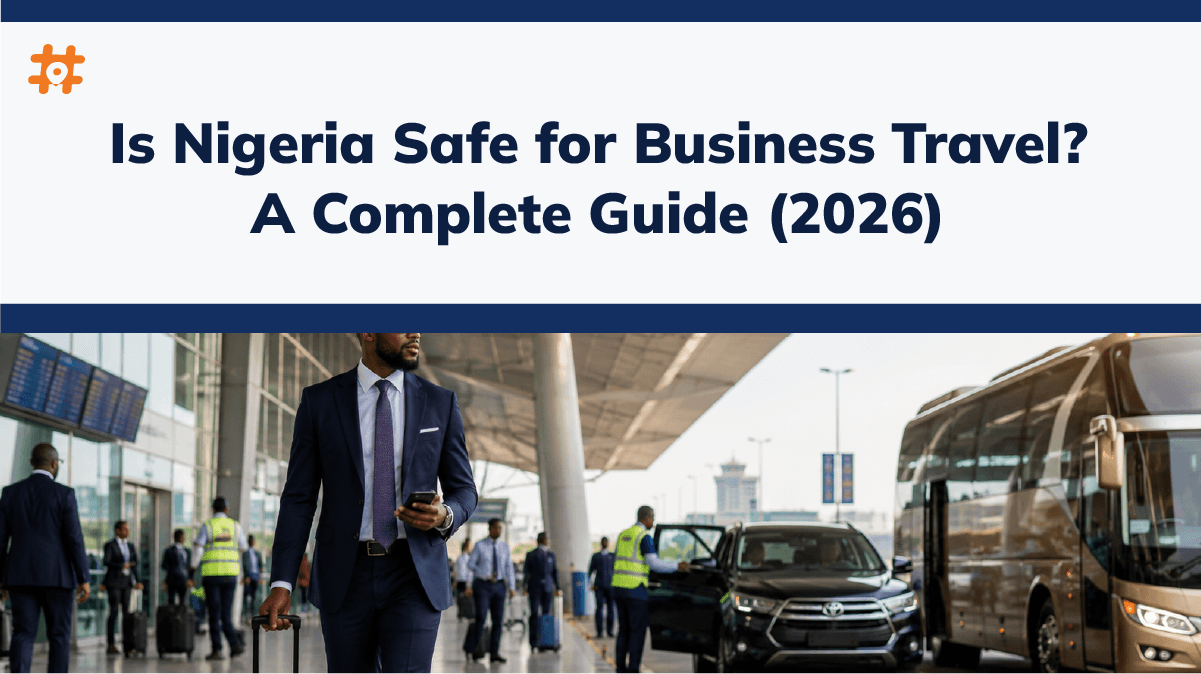
If you’ve never been to Nigeria before, chances are you’ve already searched the internet, spoken to colleagues, or read travel forums trying to answer one question:
“Is it safe to travel to Nigeria for business?”
It’s a reasonable concern.
Business travel is different from leisure travel. Meetings have fixed schedules, flights can’t always be changed, and arriving late for an important presentation or client meeting isn’t usually an option. You need reliable transportation, predictable logistics, and enough confidence in your travel plans that you can focus on work—not on figuring out how to get from one city to another.
The short answer is this:
Yes, thousands of professionals travel to Nigeria every year for conferences, investment meetings, project work, training, and corporate engagements. Like any international business destination, success depends on preparation, informed decisions, and using trusted services throughout your journey.
This guide brings together practical advice that experienced business travelers use, not just to stay safe, but to travel efficiently and make the most of their time.
Why Nigeria Continues to Attract Business Travellers
Nigeria is home to one of Africa’s largest economies and serves as a major hub for industries such as:
- Financial services
- Technology
- Oil and gas
- Manufacturing
- Agriculture
- Telecommunications
- Entertainment
- Logistics
- Retail
- Infrastructure development
Major business activity is concentrated in cities including:
- Lagos
- Abuja
- Port Harcourt
- Kano
- Enugu
- Ibadan
- Benin City
- Uyo
Many professionals also travel to secondary cities where manufacturing plants, project sites, regional offices, and commercial partners are located.
That means business travel often involves more than one destination—and careful planning becomes even more important.
Safety Starts Before You Leave Home
Experienced business travellers know that a successful trip begins long before boarding a plane.
Before travelling, make sure you have:
- A valid passport.
- The appropriate visa (where required).
- Copies of hotel reservations.
- Meeting schedules.
- Flight confirmations.
- Emergency contacts.
- Travel insurance details.
- Digital copies of important documents stored securely online.
Preparation reduces unnecessary stress once you arrive.
Choose Accommodation Close to Your Meetings
One of the simplest ways to reduce travel risk is to minimise unnecessary movement.
If your meetings are concentrated in Victoria Island, Ikeja, Wuse, GRA, or another business district, staying nearby can:
- Reduce commuting time.
- Limit exposure to heavy traffic.
- Make scheduling easier.
- Improve productivity.
The less time you spend travelling across a city, the more time you have for your business priorities.
Plan Your Transportation Before Arrival
This is where many first-time visitors make avoidable mistakes.
Landing at the airport without a transportation plan often leads to unnecessary delays, confusion, and additional costs.
Instead, think about your entire journey before departure.
Ask yourself:
- How will I leave the airport?
- How will I reach my hotel?
- How will I travel between meetings?
- What if I need to visit another state?
Many experienced travellers now organise these details before arriving rather than making decisions on the spot.
Understanding Transportation Options in Nigeria
Business travellers generally combine several modes of transportation during one trip.
Domestic Flights
Flying is often the quickest way to travel between major commercial centres such as Lagos, Abuja, Port Harcourt, Kano, and Enugu.
For executives with tight schedules, domestic flights help maximise productive time.
Interstate Buses
Not every destination is best reached by air.
Executive interstate buses connect many cities that are not served directly by commercial flights or where road travel is more practical.
Modern executive coaches often provide comfortable seating, scheduled departures, and a cost-effective option for regional business travel.
Airport Transfers
Pre-arranged airport transportation helps reduce uncertainty immediately after arrival and can make the transition from the airport to your hotel or onward connection much smoother.
Car Hire
For professionals with multiple meetings in different locations, car hire may offer additional flexibility.
Managing Business Meetings Across Multiple Cities
It’s increasingly common for one business trip to include several destinations.
For example:
- Fly into Lagos.
- Attend meetings.
- Travel to Ibadan for a factory visit.
- Continue to Abuja for a conference.
- Return home from Abuja.
Without proper planning, coordinating flights, road transport, and meeting schedules can quickly become complicated.
Using a platform that helps you compare transport options and organise your itinerary can simplify multi-city business travel considerably.
Stay Connected Throughout Your Trip
Reliable communication is essential.
Consider using:
- A local SIM card.
- International roaming.
- Portable Wi-Fi where necessary.
- Offline maps.
- Cloud storage for documents.
Keeping your devices charged with a power bank is also a simple habit that experienced travellers rarely overlook.
Practical Safety Tips for Business Travellers
Business travel is usually smoother when you follow a few consistent habits.
- Share your itinerary with a colleague or family member.
- Keep valuables discreet.
- Confirm meeting locations in advance.
- Monitor traffic before travelling to appointments.
- Leave extra time for airport transfers.
- Carry both digital and printed copies of important documents.
- Confirm transportation arrangements before departure.
These small steps can prevent many common travel disruptions.
Why Flexible Travel Planning Matters
Even the best-planned trips can change unexpectedly.
Flights may be delayed, meetings can be rescheduled, or weather may affect travel times.
The most experienced business travellers don’t just have one travel plan—they have alternatives.
Being able to compare domestic flights and interstate road transport in one place provides greater flexibility when schedules change.
This approach allows you to adapt quickly without spending valuable time searching for new travel arrangements.
Technology Is Changing Business Travel in Nigeria
Business travel has become much easier than it was even a few years ago.
Instead of calling individual transport operators or visiting multiple booking websites, professionals increasingly prefer digital platforms that help them:
- Compare transportation options.
- View travel schedules.
- Book flights and buses.
- Plan multi-city itineraries.
- Organise journeys before arrival.
This saves time and allows travellers to focus on business objectives rather than logistics.
What Experienced Business Travelers Prioritise
If you ask professionals who regularly travel across Nigeria what matters most, the answers are remarkably consistent.
They prioritise:
- Reliability over the cheapest option.
- Planning over improvisation.
- Trusted providers over unfamiliar alternatives.
- Flexibility when schedules change.
- Efficient transportation that keeps meetings on track.
These habits often make the difference between a stressful trip and a productive one.
Final Thoughts
So, is it safe to travel to Nigeria for business trips?
For many professionals, the answer is yes, provided the trip is planned thoughtfully.
Successful business travel isn’t simply about arriving safely. It’s about arriving prepared.
Choosing reliable transportation, organising your itinerary in advance, staying close to your meetings, and keeping flexible travel options available all contribute to a smoother and more productive experience.
Business opportunities move quickly, and your travel arrangements should help, not hinder your ability to take advantage of them.
Simplify Your Business Travel with Intercity
Whether you’re travelling from abroad or within Nigeria, coordinating flights, road transport, and multiple destinations doesn’t have to be complicated.
With Intercity, you can compare domestic flights, explore interstate bus options, review travel schedules, and organise different parts of your journey from a single platform.
Instead of juggling multiple booking websites or contacting several transport providers individually, you can plan more efficiently and keep your focus where it belongs, on your meetings, projects, and business goals.
Whether you’re attending a conference in Abuja, meeting clients in Lagos, visiting project sites in Port Harcourt, or travelling between several Nigerian cities, Intercity helps make your journey more organised, flexible, and convenient.
Frequently Asked Questions (FAQs) About
Many professionals travel to Nigeria each year for meetings, conferences, project work, and investment opportunities. Careful planning, choosing reputable transportation providers, and staying informed about your itinerary can contribute to a smooth business trip.
The best option depends on your schedule and destination. Domestic flights are suitable for faster travel between major cities, while executive interstate buses provide practical connections to many other destinations.
Yes. Organising airport transfers and onward transportation before arrival can reduce uncertainty, save time, and help ensure you reach meetings on schedule.
Plan your itinerary in advance, allow enough time between meetings and travel connections, and use a platform that lets you compare transport options and manage multiple bookings.
Bring your travel documents, business materials, laptop, chargers, power bank, identification, meeting schedule, suitable business attire, and digital copies of important reservations and contacts.
Related Articles
Corporate Travel Trends in Africa: Key Business Travel Insights for 2026
How to Arrange Safe Transportation in Nigeria as a Foreigner
What Should I Do If I Miss My Flight? A Step-by-Step Recovery Guide (2026)