


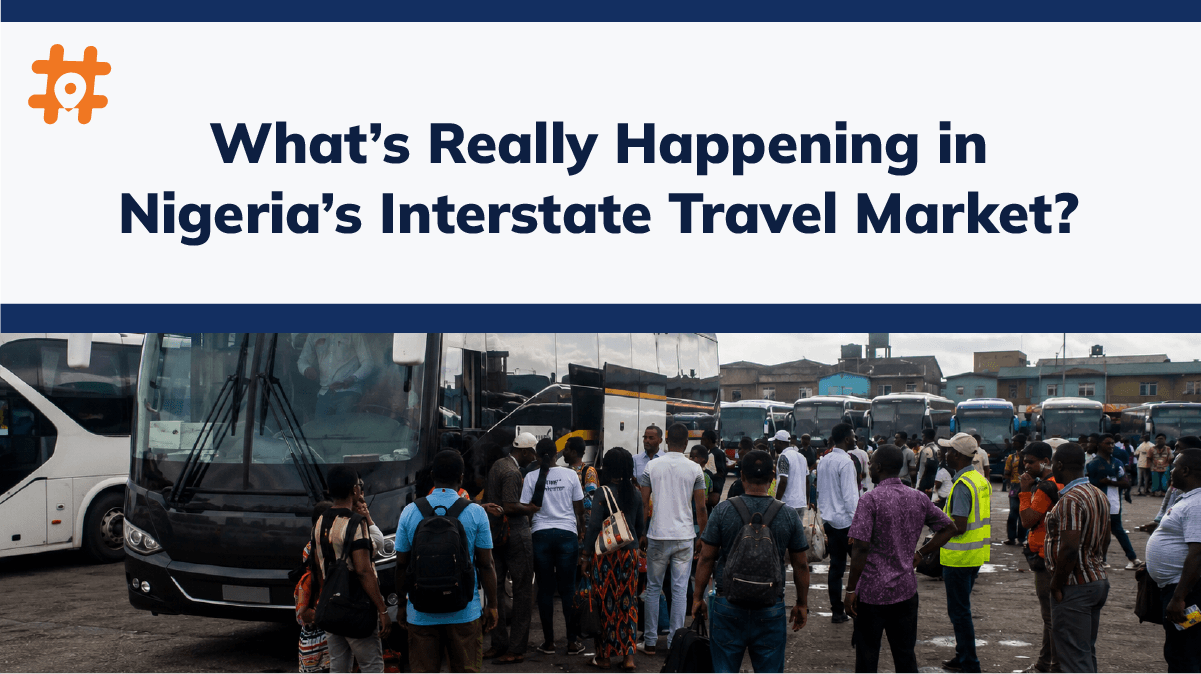
Inside Nigeria’s Interstate Travel Market: What Operators and Travellers Are Telling Us About Safety, Fares and Demand
Intercity Terminal Insight | August 2026
Nigeria’s interstate travel market is changing, and some of the clearest signals are coming from the terminals.
At Intercity, our Operations team regularly interacts with transport operators and travellers at terminals. These conversations provide a closer look at what is happening beyond booking platforms and published fares: what passengers are worried about, what operators are changing, which routes are attracting demand and what is influencing people’s decisions to travel by road.
Recent observations from Lagos terminals point to three issues that are increasingly shaping interstate travel decisions: safety concerns, the cost of road travel and changing passenger demand across routes.
The findings do not represent a nationwide survey of Nigerian travellers or transport operators. Rather, they reflect firsthand observations and conversations with operators and passengers at terminals visited by the Intercity Operations team.
But they reveal some important signals about what is happening on the ground.
At a Glance: What We Observed
Based on recent terminal interactions, Intercity’s Operations team observed:
- Security is becoming an important consideration for both operators and passengers.
- Some operators are adapting departure practices and checking road conditions before setting out.
- Some operators have reportedly reduced or stopped services on routes affected by security concerns and weaker demand.
- Operators reported stronger demand on routes including Benin, Abuja, Enugu, Port Harcourt and Cotonou.
- Some passengers said they would prefer to travel by air if they could comfortably afford it.
- Passengers are asking more questions about safety measures and departure times.
- Bad roads, roadblocks and delays remain common passenger concerns.
- Larger operators with greater operational resources appear better positioned to maintain certain services and security arrangements.
These observations point to a travel market where price, safety, reliability and route availability are increasingly connected.
1. Safety Is Becoming Part of the Travel Decision
For many travellers, choosing a bus is no longer simply about finding an available seat at an affordable price.
Safety is becoming part of the conversation before the journey even begins.
According to observations from Intercity’s Operations team, passengers at the terminals are asking questions about what safety measures are in place before they travel.
Operators are also paying attention to conditions along their routes.
Some operators reportedly communicate with partners or contacts in other states before departure to get updates on road conditions and the situation along the route. Others are adjusting departure practices to avoid arriving at destinations too late.
This suggests that the travel decision increasingly involves more than:
Where am I going, and how much does it cost?
For some passengers and operators, the questions now also include:
Is the route safe?
What is happening on the road today?
What time will we arrive?
What happens if there is a delay?
That shift is significant because it places greater importance on predictability and communication throughout the journey.
2. Operators Are Adapting to a More Challenging Operating Environment
The impact of these concerns is not limited to passengers.
Operators are also changing how they manage journeys.
Intercity’s Operations team observed several practices being used by operators, including:
- Checking road and safety conditions before departure.
- Communicating with passengers when departures are delayed.
- Trying to maintain timely departures to reduce the risk of arriving late.
- Ensuring vehicles are properly maintained to reduce the possibility of breakdowns during transit.
- Providing food, drinks or snacks to passengers during some extended departure delays.
- Using additional security arrangements where available.
These actions show an important part of the interstate travel market that passengers may not always see.
A delayed departure, for example, may not simply be an issue of poor scheduling. Operators are sometimes balancing road conditions, safety considerations, vehicle readiness and the need to reach destinations at an appropriate time.
That does not remove the frustration passengers feel when they are delayed. But it provides useful context for understanding what is happening behind the scenes.
3. Some Travellers Say They Would Rather Fly, If They Could Afford It
One of the clearest observations from the recent terminal engagement came directly from passengers.
An Intercity Operations team member spoke with four passengers as well as NYSC travellers. A recurring sentiment was that, where money was not a constraint, they would prefer to travel by air rather than by road.
The reasons mentioned included concerns about security and the cost of road transport.
This is an important observation, but it needs to be interpreted carefully.
The conversations were not a nationally representative survey, so they cannot establish that Nigerians generally prefer flying over road transport.
What they do show is something more specific and useful:
Among some travellers interviewed at the terminals, the choice between road and air is not purely about the availability of transport. Affordability and perceived safety are influencing which mode they would prefer.
For travellers who cannot justify the cost of flying, road transport remains an important option.
This creates an interesting tension in the market.
For some passengers:
Flight = preferred option, but potentially less affordable.
Road = more accessible option, but with greater concerns around security, travel time and road conditions.
That tension could become increasingly important as travel costs change.
4. Rising Transport Costs Are Adding Another Layer to the Decision
Fuel prices were repeatedly identified by operators as one of the challenges affecting their businesses.
The issue is not simply whether fuel becomes more expensive or cheaper at a particular point in time.
For operators, fuel is part of a wider operating-cost picture. Vehicle maintenance, security arrangements and other operational expenses can also influence the cost of providing interstate transport.
For passengers, those operating costs ultimately affect the price they see when planning a journey.
The result is a difficult balancing act.
Operators need fares that allow them to operate sustainably.
Passengers want fares they can afford.
And when the cost of travelling by road begins to compete more closely with other travel options, passengers may start reconsidering when they travel, whether they travel and how they travel.
This is why the relationship between transport fares and travel behaviour is worth watching closely.
5. Not Every Route Is Experiencing the Same Demand
One of the most interesting findings from the terminal observations is that passenger demand does not appear to be moving in the same direction across every route.
Operators reported continued strong demand on routes including:
- Benin
- Abuja
- Enugu
- Port Harcourt
- Cotonou
At the same time, the Operations team received reports of reduced or discontinued services on some other routes, including Jos and some routes serving Ebonyi, with security concerns and lower demand cited among the reasons.
These observations should not be interpreted as an official ranking of Nigeria’s busiest or least busy routes.
Instead, they highlight a broader market pattern:
Travel demand can behave very differently from one corridor to another.
The reasons may include a combination of factors such as destination demand, passenger affordability, security concerns, road conditions and operator economics.
6. The Benin Route Offers an Interesting Market Signal
One operator example from the terminal observations stands out.
According to the Operations team, Iyare Motors, which focuses heavily on the Benin route, continues to attract strong passenger demand.
There is an important lesson here.
A route does not necessarily need a broad network of destinations to generate strong demand if there is consistent movement between the origin and destination.
Benin’s continued demand, as observed by the Operations team, provides an example of how route-specific travel patterns can remain resilient even while conditions across the wider interstate market change.
It also reinforces why looking at individual routes can reveal more than simply looking at the national transport market as one large category.
7. What Passengers Are Asking at the Terminals
Sometimes the best indicator of what matters to travellers is simply listening to the questions they ask before boarding.
Recent passenger interactions highlighted questions and complaints around:
Safety
Passengers want to know what safety measures are in place and whether the journey can be completed safely.
Departure time
Passengers want greater certainty about when their journey will actually begin.
Road conditions
Bad roads are a concern, particularly when they contribute to longer travel times or discomfort.
Roadblocks and delays
Passengers are also concerned about roadblocks and the delays they can create during transit.
These concerns reveal something important about the passenger experience.
Travellers are not only buying a seat from one city to another.
They are also buying a degree of certainty:
- When will the bus leave?
- How long will the journey take?
- What conditions will we encounter?
- How will the operator respond if something changes?
- Can I trust the journey to go as planned?
The answers to these questions can influence how passengers judge their travel experience.
8. Why Communication Matters When Things Don’t Go According to Plan
Travel does not always happen exactly as scheduled.
Delays can occur because of road conditions, traffic, vehicle readiness, security considerations or other circumstances.
One practice observed by the Operations team is that some operators communicate with passengers when delays occur and, in some instances, provide refreshments while passengers wait.
This is a small but important part of the customer experience.
Passengers may be more understanding of an unavoidable delay when they know why it is happening and what to expect next.
For transport operators, communication can therefore become part of the service itself.
A passenger who knows what is happening is in a different position from one who is simply left waiting without information.
9. What These Terminal Observations Tell Us About Nigeria’s Interstate Travel Market
Taken together, these observations suggest that the interstate travel market is being shaped by several connected factors.
1. Safety influences demand
Concerns about security can affect how passengers choose to travel and whether operators continue serving particular routes.
2. Affordability influences travel mode
Some passengers interviewed said they would prefer to fly if they could afford it, suggesting that the cost difference between road and air can influence travel choices.
3. Demand varies significantly by route
Some routes continue to attract strong passenger movement while others face weaker demand or operational challenges.
4. Operators are adapting
Operators are monitoring road conditions, adjusting departure practices, maintaining vehicles and improving passenger communication in response to changing conditions.
5. Reliability matters
For passengers, the travel experience is not just about getting a ticket. Departure times, delays, road conditions and communication all influence the perceived quality of the journey.
10. What Intercity Will Be Watching Next
The latest terminal conversations provide useful signals, but they also raise questions that deserve continued monitoring.
Over the coming weeks, Intercity’s Operations team will continue paying attention to:
- How passenger demand changes across major interstate routes.
- Whether travellers continue to prioritise safety when choosing transport.
- Whether more passengers consider air travel when road fares rise.
- How operators respond to changing security conditions.
- Whether certain routes experience sustained increases or decreases in demand.
- How frequently buses depart with empty seats.
- Whether passengers are changing travel dates because of fares.
- How road conditions and delays affect travel times.
- What questions passengers ask before booking.
- How operators are adapting their services to changing passenger expectations.
These observations will help build a clearer picture over time.
One terminal conversation can tell us what is happening today.
Consistent observations across multiple terminals, operators and weeks can tell us what is changing in the market.
The Bigger Picture
Nigeria’s interstate travel market is not static.
Operators are responding to operating costs, security concerns, road conditions and changing demand. Travellers, meanwhile, are weighing affordability, safety, convenience and reliability when deciding how and when to travel.
The recent conversations at Lagos terminals do not tell the whole story of interstate travel in Nigeria, but they provide a valuable look at what is happening on the ground.
And that is where market insight begins.
At Intercity, we will continue listening to the people closest to the journey — the operators moving passengers and the travellers making the decisions.
Because understanding how Nigerians travel starts with understanding why they choose to travel the way they do.
About Intercity Terminal Insights
Intercity Terminal Insights is an ongoing look at the real-world trends, experiences and changes shaping interstate travel in Nigeria.
Through regular conversations with transport operators and travellers at terminals, Intercity aims to better understand changing passenger behaviour, route demand, travel costs, operational challenges and the factors influencing how Nigerians move between cities.
The observations in this article are based on recent interactions by Intercity’s Operations team at selected terminals and should not be interpreted as a nationally representative survey unless otherwise stated.
Frequently Asked Questions (FAQs) about Nigeria Interstate Travel Market: Safety, Fares & Demand Trends
The report explores the current trends, challenges, and shifts in Nigeria’s interstate travel market. It highlights firsthand observations from transport operators and passengers at terminals, focusing on key issues like safety concerns, rising travel costs, route-specific demand, and how operators are adapting to a changing operating environment.
No. As noted in the article, the findings do not represent a nationally representative survey. Instead, they reflect firsthand observations, interviews, and conversations conducted by Intercity’s Operations team with passengers and operators at selected terminals (primarily in Lagos).
Based on terminal interactions, operators reported strong and resilient demand on several key corridors, including routes to Benin, Abuja, Enugu, Port Harcourt, and Cotonou. Notably, the Benin route (with operators like Iyare Motors) continues to show strong, consistent passenger movement.
To manage a more challenging operating environment, transport operators are taking several behind-the-scenes steps, including:
Checking road conditions and security updates before departure.
Adjusting departure times to avoid late arrivals.
Improving vehicle maintenance to prevent breakdowns.
Communicating delays to passengers and occasionally providing refreshments during extended waits.
During terminal conversations, some passengers and NYSC travelers shared that they would prefer to travel by air if they could comfortably afford it. This preference is driven by growing concerns over road security, highway conditions, and the narrowing cost gap between road transport and flying.